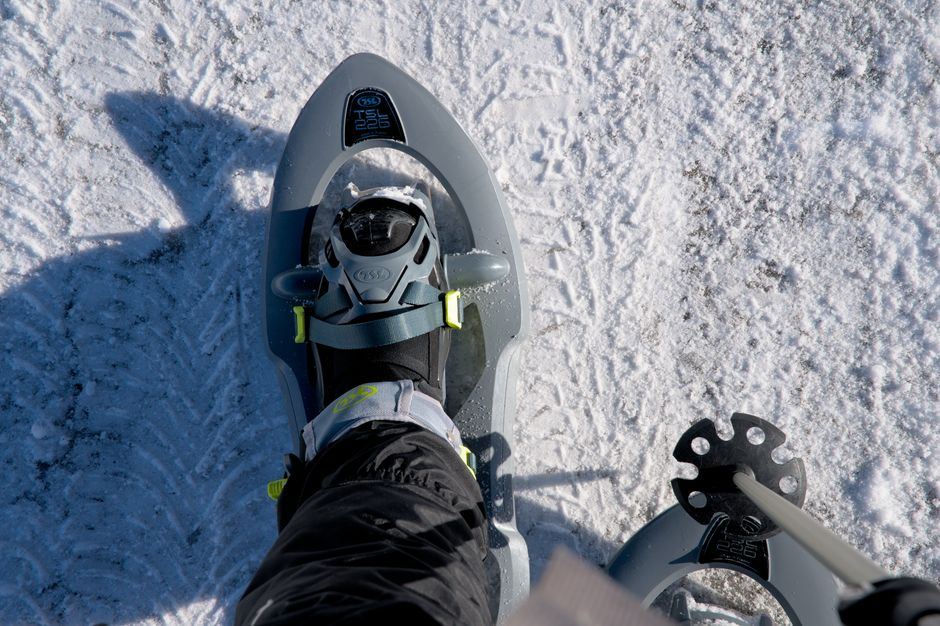
snowshoes for beginners buying guide

Easy bindings and forgiving traction for your first winter on the trail

Your first pair doesn't need backcountry crampons or a $400 price tag

A beginner's biggest snowshoe risk isn't traction, it's a binding you're still fighting with three trips in. Here's how the best-reviewed 2026 beginner-friendly picks compare.

See the beginner picks

Quick answer: Our top pick for snowshoes for beginners is the MSR Evo Trail (Best Overall for Beginners). If you're looking for best budget for beginners, the Retrospec Drifter is a strong alternative.

The binding matters more than the traction on your first few trips

Reviewed by the PowderTrek team · last updated 2026-08-29

Most people who try snowshoeing once and don't go back weren't beaten by the terrain -- they spent ten frustrating minutes in a cold parking lot fighting a binding they'd never used before. That's why the picks below lean on bindings you can learn by feel: MSR's DuoFit strap system and Retrospec's double-ratchet buckle both cinch down with gloves on, and Crescent Moon's hook-and-loop binding fits almost any boot without adjusting a single strap length.

Traction and load capacity still matter, but a beginner's first few outings are usually on established, packed trails rather than steep backcountry -- exactly where a simpler, lighter snowshoe holds up fine. None of the three picks here ask you to spend backcountry-mountaineering money to find out if you like the sport.

If you do stick with snowshoeing and start pushing into steeper or icier terrain, that's the point to look at a more aggressive traction frame like our Best Overall pick -- not before.

A binding you can learn in the parking lot

Ratchet and strap bindings (MSR, Retrospec) take a couple of tries to get comfortable with but hold snugly once set; hook-and-loop bindings (Crescent Moon) are nearly instant but can loosen slightly over a long day and need an occasional re-cinch.

Don't over-buy load capacity or traction for your first season

A budget or beginner-tier snowshoe's lower weight rating and simpler traction rails are built for packed trails and moderate conditions -- exactly what most first-timers actually snowshoe on, not the icy sidehills a $400 backcountry shoe is designed for.

Foam deck vs. framed deck changes how the shoe feels underfoot

A foam-deck snowshoe like the Crescent Moon flexes with your stride and feels closer to walking in a regular shoe, which some beginners find less intimidating than a rigid aluminum-framed deck -- at the cost of flotation in deeper snow.

Product Best For Price Rating
MSR Evo Trail Best Overall for Beginners $150 - $180 4.5/5
Retrospec Drifter Best Budget for Beginners $70 - $95 4.3/5
Crescent Moon EVA Foam Snowshoes Easiest Learning Curve $150 4.4/5
Best Overall for Beginners

MSR Evo Trail

4.5

A simple, budget-conscious snowshoe with molded-in steel traction rails and a glove-friendly DuoFit binding that's easy to learn on straight out of the box.

  • DuoFit binding is intuitive for first-time snowshoers
  • Steel traction rails molded into the deck resist wear
  • Lighter weight makes early outings less tiring
  • 180-lb load capacity is lower than backcountry models
  • Less aggressive traction on steep, icy terrain
Best Budget for Beginners

Retrospec Drifter

4.3

An aluminum-frame starter snowshoe with a double-ratchet binding and included carry bag, built for occasional trail use without the backcountry price tag.

  • Lowest price in this comparison by a wide margin
  • Double-ratchet binding is simple to adjust
  • Comes with a carry bag included
  • Traction and flotation lag behind pricier models in deep or icy snow
  • Build quality feels less rugged for frequent, heavy use
Easiest Learning Curve

Crescent Moon EVA Foam Snowshoes

4.4

A dual-density foam-deck snowshoe with a hook-and-loop binding that fits almost any boot or running shoe, built to move and flex more like a regular shoe than a rigid frame.

  • Hook-and-loop binding fits nearly any boot without adjustment know-how
  • Foam deck flexes underfoot for a natural walking gait, not a rigid platform to fight
  • Quiet, lightweight feel that beginners often find less intimidating on a first outing
  • Noticeably less flotation and traction than aluminum-framed models in deep or icy snow
  • Best suited to groomed or packed trails, not steep or technical terrain
⚡ Limited-time perk

Free two-day delivery on your pick

Get your pick delivered fast -- try Amazon Prime free for 30 days.

Sponsored link -- we may earn a fee if you sign up. No extra cost to you.

Which one should you get?

You want the most well-rounded first pair, one you might keep using past your first season

The MSR Evo Trail's steel traction rails and DuoFit binding cover packed trails now and hold up reasonably well if you start venturing onto steeper terrain later.

You're not sure you'll stick with the sport and don't want to spend much finding out

The Retrospec Drifter gets you a full, functional snowshoe setup for well under $100, including a carry bag.

You want the least intimidating first experience, especially on groomed or packed trails

The Crescent Moon EVA Foam's hook-and-loop binding fits almost any boot in seconds, and the flexible foam deck feels closer to walking in regular shoes than a rigid frame.

Frequently Asked Questions

Do I need an expensive snowshoe for my first time out?

No -- beginner-friendly snowshoes in the $70-180 range, like the Retrospec Drifter or MSR Evo Trail, cover packed and moderately deep snow just fine. Save the backcountry-rated, $300+ options for once you know you'll use the extra traction and load capacity.

What's the easiest binding system to learn on?

Hook-and-loop bindings, like the one on the Crescent Moon EVA Foam, are the fastest to figure out since they fit almost any boot without adjusting strap lengths. Ratchet and strap bindings (MSR, Retrospec) take a couple of tries but cinch down more securely for a full day out.

Can I use a beginner snowshoe on any trail?

Beginner-tier snowshoes are built for packed or moderately deep snow on established trails, which covers most first outings. They're not designed for steep, icy, or technical backcountry terrain -- that's where a more aggressive traction frame and higher load rating actually earn their price.

Will a foam-deck snowshoe like the Crescent Moon work as well as a framed one?

For groomed or packed trails, yes -- many beginners find the flexible foam deck more comfortable and natural underfoot. It gives up flotation and traction compared to an aluminum-framed shoe once snow gets deep or icy, so it's a better fit for easier terrain than for backcountry conditions.

View our top pick →