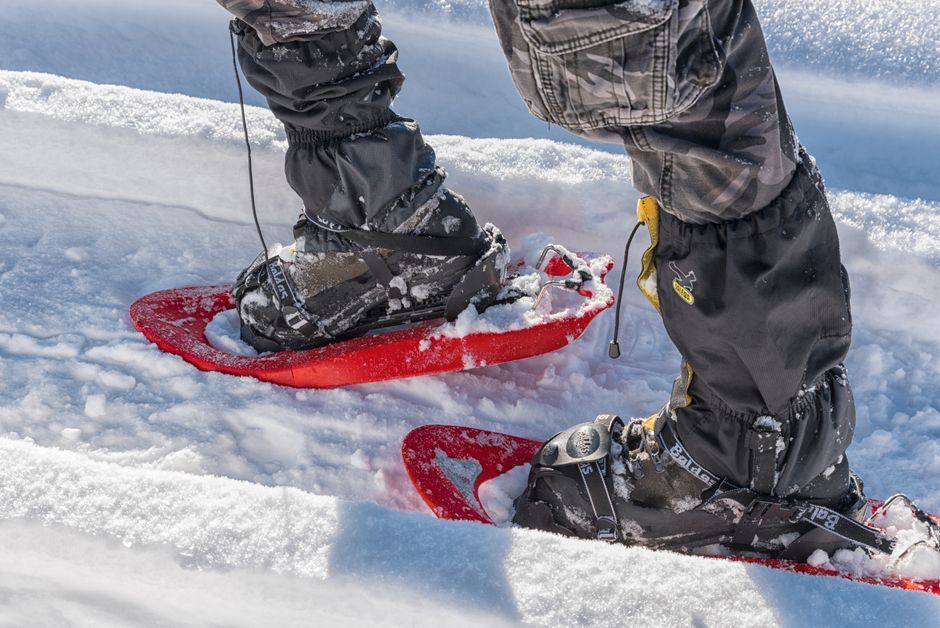
snowshoes for heavier hikers and larger frames buying guide

Match your loaded weight to real flotation, not just shoe size

Sinking to your knees isn't a fitness problem, it's a sizing problem

Snowshoe flotation is rated by total loaded weight, not shoe size alone. Here's how the best-reviewed 2026 high-capacity snowshoes compare for heavier hikers and larger frames.

See the high-capacity picks
⚡ Limited-time perk

Free two-day delivery on your pick

Get your pick delivered fast -- try Amazon Prime free for 30 days.

Sponsored link -- we may earn a fee if you sign up. No extra cost to you.

Quick answer: Our top pick for snowshoes for heavier hikers and larger frames is the MSR Lightning Ascent 30" (Best Overall for Heavier Hikers). If you're looking for best for extra-large frames, the Atlas Range-MTN 35" is a strong alternative.

Flotation is rated by loaded weight, not just your own body weight

Reviewed by the PowderTrek team · last updated 2026-08-24

Every snowshoe has a maximum recommended load, and that number is meant to cover your body weight plus boots, clothing, and anything in your pack -- not just what you'd see on a bathroom scale. A hiker who weighs 220 lbs but carries a loaded winter pack can easily push past 250 lbs of total weight on the snow, which matters because undersized snowshoes for your loaded weight sink deeper and take noticeably more effort per step.

The general sizing rule reviewers use: a 250-lb loaded hiker should be looking at 30-inch snowshoes rated for at least 280 lbs, and heavier loads generally call for both a longer deck and a reinforced frame rather than just a bigger version of a lightweight design. Several snowshoe lines also sell modular tail extensions that clip onto a shorter, cheaper pair to boost capacity without buying a dedicated large-frame model outright.

None of the picks below sacrifice traction or build quality for the extra capacity -- the tradeoff is almost entirely in price and maneuverability, since a longer deck is harder to place precisely in tight or brushy terrain than a shorter one.

Size for total loaded weight, not just body weight

Add your body weight, boots, clothing, and pack contents together before checking a snowshoe's rated capacity -- a winter day pack alone can add 15-25 lbs, enough to push a borderline hiker into the next size bracket.

Longer deck vs. add-on tail extensions

A purpose-built long-frame snowshoe, like the Lightning Ascent 30" or Range-MTN 35", performs more consistently across conditions, while clip-on tail extensions are a cheaper way to boost capacity on a shorter pair you may already own, at some cost to how the shoe balances underfoot.

Traction still matters at higher capacities

A higher weight rating doesn't automatically mean better traction -- check the crampon and side-rail design specifically, since a heavier loaded hiker puts more stress on the traction system on icy sidehills than a lighter one would.

Product Best For Price Rating
MSR Lightning Ascent 30" Best Overall for Heavier Hikers $375 - $410 4.8/5
Atlas Range-MTN 35" Best for Extra-Large Frames $300 - $330 4.6/5
MSR Evo Trail with Tail Extensions Best Budget-Friendly Capacity Boost $150 - $220 4.5/5
XtremPro Snowshoes 36" Best Ultra-Budget High-Capacity $55 - $80 4.0/5
Best Overall for Heavier Hikers

MSR Lightning Ascent 30"

4.8

The 30-inch version of our Best Overall pick, rated to support up to roughly 280 lbs of combined hiker-plus-gear weight, with the same aggressive steel traction frame that holds on icy sidehills as the standard-length model.

  • Rated to roughly 280 lbs combined hiker-plus-gear weight
  • Same 360-degree traction frame as the standard-length Lightning Ascent
  • Performs well in both deep powder and icy sidehill terrain
  • Highest price in this comparison
  • Longer deck is less maneuverable in tight, brushy terrain
Best for Extra-Large Frames

Atlas Range-MTN 35"

4.6

The largest Atlas frame size, rated to a 300-lb max recommended load -- built for hikers and gear loads at the very top of what most snowshoe lines support, without stepping into specialty mountaineering pricing.

  • 300-lb max recommended load, among the highest in this comparison
  • 35-inch deck adds flotation without needing add-on tails
  • Lighter per pair than some competing 300-lb-rated frames
  • Longest, least maneuverable deck length in this comparison
  • Overkill for hikers under roughly 200 lbs loaded weight
Best Budget-Friendly Capacity Boost

MSR Evo Trail with Tail Extensions

4.5

The same Best for Beginners Evo Trail from our main lineup, with MSR's modular 6-inch tail extensions clipped on -- pushing recommended capacity from 180 lbs up to roughly 250 lbs without buying a different, pricier snowshoe.

  • Tail extensions raise capacity from 180 lbs to roughly 250 lbs
  • Cheaper than buying a dedicated large-frame snowshoe outright
  • Extensions are removable if you don't need the extra flotation every trip
  • Still tops out lower than the MSR Lightning Ascent 30" or Atlas Range-MTN 35"
  • Tail extensions are an extra part to buy, attach, and keep track of
Best Ultra-Budget High-Capacity

XtremPro Snowshoes 36"

4.0

A budget aluminum-frame snowshoe whose largest 36-inch size is rated for roughly 300-350 lbs, undercutting every other high-capacity pick here on price by a wide margin.

  • Roughly 300-350 lb rated capacity at a fraction of the other picks' price
  • Lightweight aluminum 7075 frame keeps the pair manageable despite the size
  • Includes a carry bag
  • Traction and binding quality noticeably below the MSR and Atlas picks
  • Less field-tested by major outdoor gear reviewers than the established brands here

Which one should you get?

You want the best all-around performance at a higher capacity

The MSR Lightning Ascent 30" carries the same traction frame as our overall top pick, just sized up to 280 lbs.

You're at the very top of the weight range most snowshoes support

The Atlas Range-MTN 35" is rated to 300 lbs, among the highest capacity in this comparison.

You already own a lighter pair and just need more flotation occasionally

MSR's tail extension kit for the Evo Trail boosts capacity from 180 to roughly 250 lbs without a full replacement purchase.

Frequently Asked Questions

How do I know what weight capacity snowshoe I actually need?

Add your body weight, boots, clothing, and everything in your pack together -- that total loaded weight is what a snowshoe's rated capacity refers to, not just your body weight alone. A winter day pack can easily add 15-25 lbs, which is often enough to push a borderline hiker into needing the next size up.

Are tail extensions as good as buying a bigger snowshoe outright?

They get you most of the way there for less money -- MSR's tail extensions push the Evo Trail's capacity from 180 lbs to roughly 250 lbs, which covers a lot of heavier hikers without buying a dedicated large-frame pair. For loads above that, or for the most consistent balance and performance, a purpose-built long-frame snowshoe like the Lightning Ascent 30" or Range-MTN 35" still performs more predictably.

Does a higher weight capacity always mean a bigger, less maneuverable snowshoe?

Generally yes -- more flotation area requires more deck length, and a longer deck is harder to place precisely in tight or brushy terrain than a shorter one. That tradeoff is worth accepting if you're actually near the top of a shorter snowshoe's rated capacity, since sinking in deep snow costs far more effort than a slightly less nimble longer deck.

Is a cheap high-capacity snowshoe like the XtremPro actually reliable?

It covers the core flotation need at a genuinely low price, with a rated capacity competitive with snowshoes costing four to five times more, but the traction and binding quality are noticeably below the MSR and Atlas picks here, and it has less track record with major outdoor gear reviewers. It's a reasonable choice if budget is the deciding factor and you're not hiking aggressive icy terrain regularly.