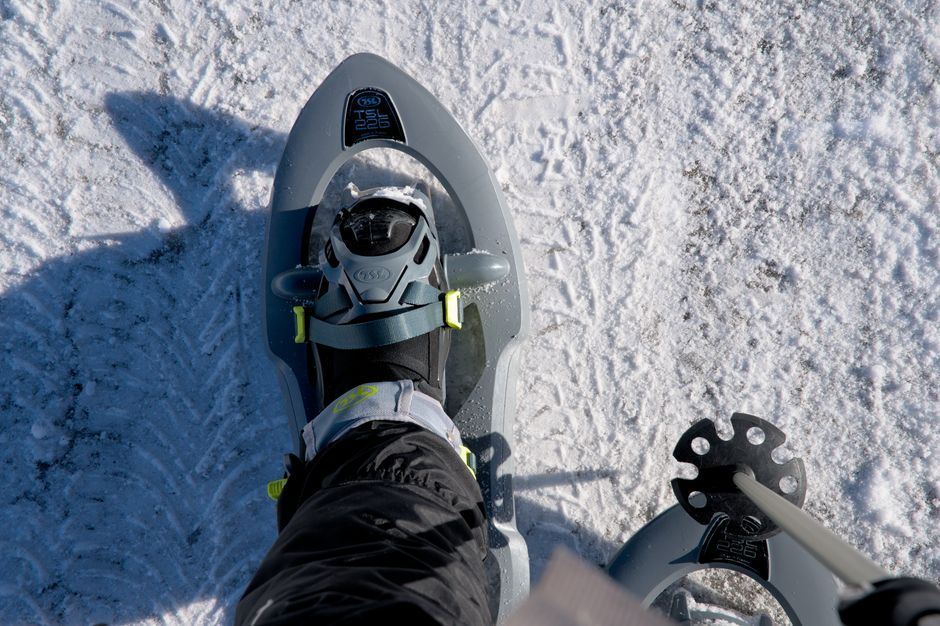
snowshoes for running and racing buying guide

Built for turnover and a natural stride, not backcountry flotation

Running on snow needs a different snowshoe than hiking on it

Racing and running snowshoes trade deep-powder flotation for a narrower deck, lighter frame, and a binding that locks down fast -- here's how the best-reviewed 2026 picks compare.

See the running-focused picks
⚡ Limited-time perk

Free two-day delivery on your pick

Get your pick delivered fast -- try Amazon Prime free for 30 days.

Sponsored link -- we may earn a fee if you sign up. No extra cost to you.

Quick answer: Our top pick for snowshoes for running and racing is the Atlas Race Snowshoe (Best Overall for Racing). If you're looking for best value for running, the Northern Lites Race Ultralight Running Snowshoe is a strong alternative.

Why a hiking snowshoe slows down a running stride

Reviewed by the PowderTrek team · last updated 2026-08-26

Every snowshoe in our main lineup is built around hiking: a wider deck for flotation, a secure strap or ratchet binding, and enough traction hardware to handle steep or icy terrain at a walking pace. Running and racing snowshoes solve a different problem entirely -- moving fast, with a natural stride, over packed or groomed winter trails, where deep-powder flotation matters far less than weight and deck width.

The tradeoffs are consistent across the category: a narrower, tapered deck tracks closer to how your foot naturally moves when running instead of forcing a wider, waddling gait, and the frames shed weight aggressively, often coming in at half the weight of a standard hiking snowshoe. Bindings shift toward speed-lace or single-pull designs that go on fast before a run rather than the strap systems built for all-day comfort on a hike.

If you're training for or entering an organized snowshoe race, check that a model is built to the sport's standard sizing and traction rules before buying -- USSSA-style races typically specify minimum dimensions. For casual winter trail running rather than competitive racing, that requirement doesn't apply, and any of the picks below will noticeably outperform a standard hiking snowshoe at a running pace.

Narrow deck for a natural stride

A tapered, narrow-toed deck lets your feet track closer together than a wide hiking snowshoe does, which is what actually makes running in snowshoes feel like running rather than an awkward shuffle.

Weight matters more here than almost anywhere else in snowshoeing

Racing and running snowshoes routinely weigh under 2 lbs per pair, roughly half a typical hiking snowshoe's weight -- every extra ounce shows up directly in leg fatigue over a run rather than a slower-paced hike.

Fast bindings over all-day comfort

Speed-lace and single-loop pull bindings go on quickly before a run and hold snugly at speed, trading some of the cushioned, all-day comfort of a strap or ratchet hiking binding for a lower-profile, faster fit.

Check race rules before buying for competition

If you plan to enter an organized snowshoe race, confirm the model meets that race's minimum size and traction rules first -- casual running has no such requirement, but competitive events often do.

Product Best For Price Rating
Atlas Race Snowshoe Best Overall for Racing $300 - $325 4.6/5
Northern Lites Race Ultralight Running Snowshoe Best Value for Running $170 - $210 4.5/5
Crescent Moon Gold 12 Running Snowshoe Best Lightest Race-Ready $150 - $200 4.4/5
Best Overall for Racing

Atlas Race Snowshoe

4.6

A purpose-built racing snowshoe with titanium heel and toe crampons and Atlas's Speed V-Frame, designed to give just enough bite on packed and firm winter trails without disrupting a running gait.

  • Titanium crampons stay light while still gripping packed and firm trail
  • Narrow Speed V-Frame tracks a natural running stride
  • Purpose-built for USSSA-style racing, not adapted from a hiking shoe
  • Priciest pick in this comparison
  • Narrow deck sacrifices flotation in deep, unbroken powder
Best Value for Running

Northern Lites Race Ultralight Running Snowshoe

4.5

An ultralight aluminum-frame running snowshoe with a speed-lace binding, built roughly 30% lighter than a typical running snowshoe to keep turnover quick over long distances.

  • Around 1.75 lbs per pair, noticeably lighter than standard hiking snowshoes
  • Speed-lace binding goes on quickly before a run or race start
  • Lower price than dedicated race-only frames like the Atlas Race
  • Rated capacity (up to 200 lbs) is lower than heavier-duty hiking models
  • Less aggressive traction than backcountry-focused snowshoes on ice
Best Lightest Race-Ready

Crescent Moon Gold 12 Running Snowshoe

4.4

A 3.3-lb-per-pair aluminum running snowshoe with Crescent Moon's single-loop pull binding, built for hiking-to-running crossover use as much as dedicated racing.

  • Single-loop pull binding is fast to cinch down with cold hands
  • Lighter and narrower than general trail/hiking snowshoes
  • Crosses over well between casual running and faster trail days
  • Less specialized for competitive racing than the Atlas Race
  • Aluminum crampons bite less aggressively on ice than titanium or steel

Which one should you get?

You're training for or entering a competitive snowshoe race

The Atlas Race Snowshoe is purpose-built for racing, with titanium crampons and a frame designed around race rules and speed.

You want a lighter snowshoe for winter trail running without racing

The Northern Lites Race Ultralight covers most of the weight savings at a lower price than a dedicated race frame.

You split time between hiking and faster trail days

The Crescent Moon Gold 12 crosses over comfortably between the two rather than being a pure racing tool.

Frequently Asked Questions

What actually makes a snowshoe good for running instead of hiking?

Mainly three things: a narrower, tapered deck that tracks closer to a natural running stride, a much lighter frame (often under 2 lbs per pair versus 3.5-4+ lbs for a hiking snowshoe), and a fast binding like a speed-lace or single-pull system rather than a strap or ratchet built for all-day comfort. Traction is usually lighter-duty too, since running snowshoes are built around packed or groomed trails, not steep or icy backcountry terrain.

Do I need a race-legal snowshoe just to run in the snow casually?

No -- sizing and traction rules like USSSA's minimum dimensions only matter if you're entering an organized, sanctioned race. For casual winter trail running, any running-oriented snowshoe, including the picks here, works without needing to check race-legal specs.

Can I use my regular hiking snowshoes for running instead of buying dedicated race ones?

You can, but it won't feel like running -- a wider hiking deck forces a wider, less natural stride, and the extra weight (often close to double a running snowshoe's) adds up quickly over any real distance. It works for a short jog, but anyone running regularly on snow notices the difference a narrower, lighter frame makes.