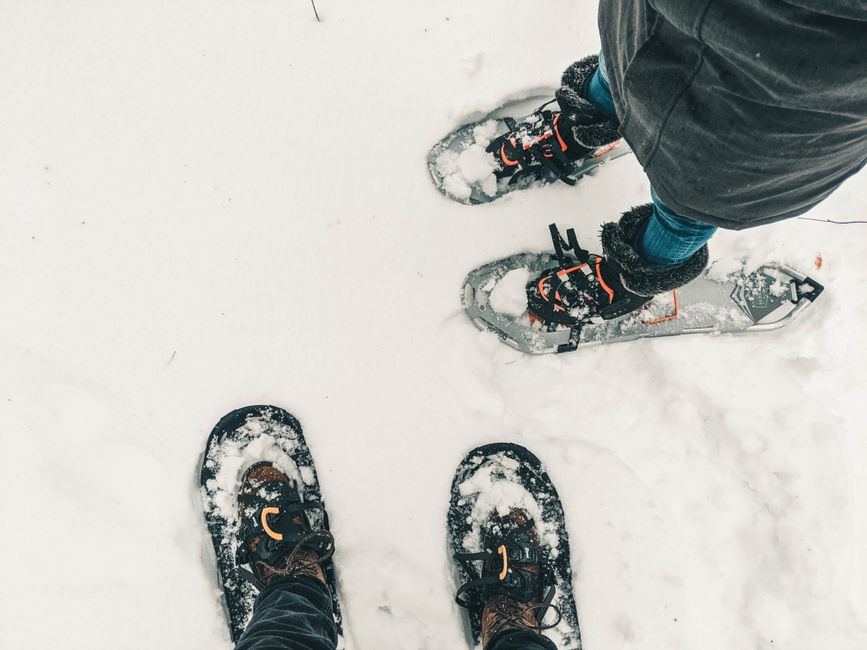
snowshoes for icy and hardpack trail conditions buying guide

When the snow is packed down or glazed with ice, traction matters more than flotation

Packed and icy trails need traction, not more flotation

A snowshoe built to float in deep powder isn't automatically the best choice once the trail turns hard and glazed. Here's how the best-reviewed 2026 picks compare for grip on ice and hardpack.

See the traction-focused picks
⚡ Limited-time perk

Free two-day delivery on your pick

Get your pick delivered fast -- try Amazon Prime free for 30 days.

Sponsored link -- we may earn a fee if you sign up. No extra cost to you.

Quick answer: Our top pick for snowshoes for icy and hardpack trail conditions is the MSR Revo Explore (Best Overall for Ice & Hardpack). If you're looking for best for steep, icy descents, the Tubbs Mountaineer is a strong alternative.

Ice and hardpack call for a different snowshoe than deep powder does

Reviewed by the PowderTrek team · last updated 2026-08-25

Most snowshoe marketing focuses on flotation -- how well a pair keeps you on top of deep, soft snow. But a huge share of real trail days involve packed-down, refrozen, or outright icy conditions, where flotation barely matters and the deciding factor becomes how well the crampons and side rails actually bite into a hard surface.

The traction hardware varies more than most first-time buyers expect. Full-length serrated frame teeth (like the MSR Revo Explore's) grip continuously along the edge of the shoe, while a dedicated underfoot crampon with multiple sharp teeth (like Tubbs' Anaconda design) concentrates grip right under your foot for steep climbs and descents. Rear-facing heel teeth specifically aid the descent, which is often the more slip-prone direction on icy trails.

None of the picks below trade away flotation entirely -- they're all still real snowshoes, not crampons alone -- but each is chosen specifically for how it performs once the snow firms up, based on 2026 field-test coverage from outdoor gear publications.

Full-frame teeth vs. concentrated underfoot crampons

Serrated teeth running the length of the frame (MSR's approach) grip continuously as your foot rolls through a stride, while a concentrated toe-and-heel crampon design (Tubbs' Anaconda) puts more sharp points directly underfoot for steep, technical terrain. Either works well on ice; the frame-teeth approach tends to feel more natural on rolling terrain, while concentrated crampons excel on steep pitches.

Rear-facing heel teeth matter more than people expect

Descending an icy slope is often more slip-prone than climbing it, since your weight shifts forward and downhill. A crampon design with teeth angled to bite on the way down, like the Tubbs Mountaineer's heel crampon, is worth prioritizing if your routes involve real elevation change rather than flat, packed trails.

Don't over-index on ice traction if your trails are mostly flat and packed

If your typical trail is a groomed, flat park path that just gets packed down rather than genuinely icy, the traction rails on a budget-friendly pick like the MSR Evo Trail are usually enough -- save the premium traction-specialist models for routes with real elevation change or glazed, refrozen sections.

Product Best For Price Rating
MSR Revo Explore Best Overall for Ice & Hardpack $280 - $290 4.6/5
Tubbs Mountaineer Best for Steep, Icy Descents $260 - $280 4.6/5
MSR Lightning Ascent Best for Mixed Powder & Ice $375 - $410 4.8/5
MSR Evo Trail Best Budget for Packed Trails $150 - $180 4.5/5
Best Overall for Ice & Hardpack

MSR Revo Explore

4.6

A lighter backcountry-oriented snowshoe with serrated teeth running the full length of its aluminum frame plus a large underfoot crampon, built to bite into icy traverses rather than just float over soft snow.

  • Full-frame serrated teeth plus a large center crampon grip ice and hardpack confidently
  • Easy-to-engage heel lift reduces calf fatigue on climbs
  • Lighter per pair than most comparably traction-focused snowshoes
  • Flotation lags behind deep-powder-focused models like the Lightning Ascent
  • Pricier than general-purpose day-hiking snowshoes
Best for Steep, Icy Descents

Tubbs Mountaineer

4.6

A rigid, wide-frame backcountry snowshoe with Tubbs' 8-tooth Anaconda crampon at the midfoot and rear-facing heel teeth specifically for grip on steep descents, rated for combined body-and-load weights up to 250 lbs.

  • Rear-facing heel crampon teeth specifically aid grip on steep, icy descents
  • 8-tooth Anaconda midfoot crampon bites confidently into hardpack
  • ActiveFit binding stays secure on long, technical outings
  • Heavier, more rigid frame than lighter day-hiking picks
  • Overbuilt for mellow, well-packed park trails
Best for Mixed Powder & Ice

MSR Lightning Ascent

4.8

Our Best Overall pick from the main lineup, included here because its 360-degree steel traction frame handles hardpack and icy sidehills as confidently as it floats in deep powder -- the safest single choice if conditions vary trail to trail.

  • 360-degree traction frame grips ice and hardpack, not just powder
  • One pair covers both deep-snow and icy-trail days
  • Televator heel lifts reduce calf strain on icy climbs
  • Priciest pick in this comparison
  • Traction-specialist picks like the Revo Explore or Mountaineer have a slight edge on pure ice
Best Budget for Packed Trails

MSR Evo Trail

4.5

Our Best for Beginners pick from the main lineup, included here because its molded-in steel traction rails and crampons bite confidently into packed snow and ice at a fraction of the price of dedicated backcountry models.

  • Steel traction rails and crampons handle packed snow and ice confidently
  • Lowest price of the traction-capable picks in this comparison
  • Lighter weight for shorter, packed-trail outings
  • Traction is solid but not as aggressive as the Revo Explore or Mountaineer on steep ice
  • 180-lb load capacity is lower than the backcountry-focused picks

Which one should you get?

Your trail conditions swing between deep powder and icy patches in the same outing

The MSR Lightning Ascent's 360-degree traction frame handles both without needing a second pair of snowshoes.

You're doing steep climbs and descents on refrozen or glazed snow

The Tubbs Mountaineer's rear-facing heel crampon teeth are built specifically to grip on the way down, not just the way up.

You want the lightest, most traction-focused pair and don't need much flotation

The MSR Revo Explore's full-frame serrated teeth and large underfoot crampon prioritize ice grip over deep-powder flotation.

Your trails are packed down rather than truly icy, and budget matters

The MSR Evo Trail's steel traction rails handle packed snow confidently at the lowest price in this comparison.

Frequently Asked Questions

Do I need a different snowshoe for ice than for deep powder?

Not necessarily a completely different pair, but it does change what to prioritize. Deep-powder days reward a wider deck and more flotation area; icy or hardpack days reward aggressive crampons and side-rail teeth over flotation, since a hard surface doesn't need much flotation to begin with. A traction-focused all-rounder like the MSR Lightning Ascent covers both reasonably well if you don't want to own two pairs.

What's the difference between frame teeth and an underfoot crampon?

Frame teeth (serrated edges along the side rails) grip continuously as your foot rolls through each stride, which feels natural on rolling or traversing terrain. An underfoot crampon concentrates several sharp teeth directly beneath your foot, which digs in harder on steep, technical pitches. Premium traction-focused snowshoes, like the Tubbs Mountaineer and MSR Revo Explore, typically combine both.

Why do rear-facing heel teeth matter for icy trails?

Most of the slipping on an icy trail happens on the way down, when your weight shifts forward and downhill onto the front of your foot while the heel is still trying to hold. A crampon with teeth specifically angled to bite during that heel-strike motion, like the Tubbs Mountaineer's design, grips better on descents than a crampon optimized only for the uphill climb.