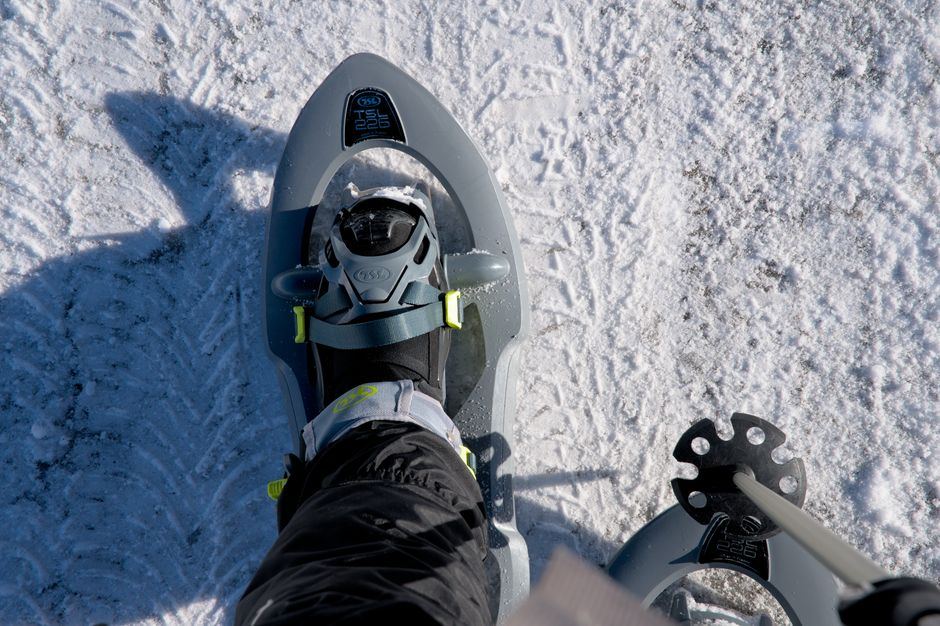
snowshoes buying guide

Snowshoes and winter trail gear, compared for real snow conditions

The best snowshoes for every kind of snowy trail

Based on current 2026 field tests and buyer reviews, we compare flotation, traction, and binding speed across the top snowshoe models -- from backcountry-ready pairs to budget-friendly starter sets.

Compare the top snowshoes
⚡ Limited-time perk

Free two-day delivery on your pick

Get your pick delivered fast -- try Amazon Prime free for 30 days.

Sponsored link -- we may earn a fee if you sign up. No extra cost to you.

Quick answer: Our top pick for snowshoes is the MSR Lightning Ascent (Best Overall). If you're looking for best for backcountry, the Tubbs Flex VRT is a strong alternative.

Finding the right snowshoe for your terrain

Reviewed by the PowderTrek team · last updated 2026-08-24

Not all snowshoes are built for the same job. A pair designed for steep, technical backcountry routes prioritizes aggressive traction and a locked-in binding, while a trail-day snowshoe favors a lighter build and a binding you can step into in seconds. Buying based on price alone, without matching the snowshoe to the terrain you'll actually cover, is the most common reason people end up unhappy with their first pair.

Two numbers matter more than most marketing copy suggests: load capacity and deck size. Load capacity should cover your body weight plus a loaded pack, with some margin -- undersized snowshoes sink and posthole in soft snow no matter how good the traction is. Deck size works the same way in reverse: a bigger deck floats better in deep powder but feels clumsy and slow on packed, groomed trails.

Binding systems vary more than most first-time buyers expect. Step-in bindings are fastest but need a specific boot shape to lock in properly; strap and ratchet bindings fit a wider range of footwear but take longer to adjust, especially with cold hands or gloves on. If you'll be switching boots between outings, a more universal binding is usually worth the extra few seconds it takes to put on.

A good pair of snowshoes is really the starting point of a full winter trail kit. Once your feet have traction and flotation sorted out, the next weak points are usually what's on your feet underneath the snowshoes and what's keeping the rest of you dry -- which is why we've also compared winter hiking boots and insulated snow pants below, the two purchases that most snowshoers end up making within their first season.

Load capacity vs. your actual weight

Add your body weight, boots, and a loaded pack together, then check that against the snowshoe's rated load capacity -- most manufacturers list this per-model. Cutting it close causes sinking and posthole-heavy walking, especially in soft or fresh snow.

Match deck size to your typical snow

Shorter, narrower decks (21-25in) suit packed trails and rolling terrain; longer decks (25-30in) or ones with add-on flotation tails handle deep, unbroken powder better. Most manufacturers offer the same model in multiple lengths.

Binding speed vs. binding universality

Step-in and dial-based bindings go on fastest but work best with a narrower range of boot shapes. Strap and ratchet bindings take a bit longer but adapt to almost any winter boot, which matters if you rotate footwear between trips.

Traction for your terrain

Flat traction rails handle packed, rolling trails fine, but steep or icy terrain calls for aggressive toe crampons and side rails that bite into hardpack -- check what's actually integrated into the frame, not just the marketing description.

Build a full winter trail kit, not just a snowshoe

Snowshoes only solve traction and flotation -- what you wear underneath them determines whether a cold, wet outing stays comfortable. Pairing your snowshoes with waterproof winter hiking boots and insulated snow pants (both compared below) covers the rest of a typical snowshoeing trip.

Product Best For Price Rating
MSR Lightning Ascent Best Overall $375 - $410 4.8/5
Tubbs Flex VRT Best for Backcountry $260 - $300 4.6/5
Atlas Range-Trail Best for Day Hiking $210 - $230 4.6/5
MSR Evo Trail Best for Beginners $150 - $180 4.5/5
Retrospec Drifter Best Budget $70 - $95 4.3/5
Best Overall

MSR Lightning Ascent

4.8

MSR's flagship backcountry snowshoe, built around a one-piece aluminum Total Traction frame and Televator heel lifts that cut calf fatigue on steep climbs.

  • 360-degree traction frame grips ice and hardpack, not just powder
  • Televator heel lifts reduce calf strain on steep climbs
  • Modular tail adds flotation for deep-snow days
  • Priciest pair in this lineup
  • Overkill for flat, groomed trails
Best for Backcountry

Tubbs Flex VRT

4.6

A composite-deck snowshoe with a torsional Flex VRT frame that flexes with your stride on uneven, steep terrain, paired with a BOA dial binding for a fast, secure fit.

  • BOA dial binding tightens evenly in seconds, even with gloves on
  • Torsion Deck flexes naturally with uneven terrain
  • Aggressive traction rails hold on icy sidehills
  • Heavier than aluminum-frame competitors
  • BOA dial is one more mechanical part that can wear out
Best for Day Hiking

Atlas Range-Trail

4.6

A lighter, trail-focused snowshoe with a wrap-around Wrapp Stretch binding that's fast to step into and comfortable over multi-hour outings on rolling terrain.

  • Two-buckle binding is quick to get in and out of
  • Comfortable, lighter build for multi-hour trail days
  • Solid traction for uphill, downhill, and sidehill movement
  • Less flotation than dedicated backcountry/mountaineering models
  • Not built for the steepest, most technical terrain
Best for Beginners

MSR Evo Trail

4.5

A simple, budget-conscious snowshoe with molded-in steel traction rails and a glove-friendly DuoFit binding that's easy to learn on straight out of the box.

  • DuoFit binding is intuitive for first-time snowshoers
  • Steel traction rails molded into the deck resist wear
  • Lighter weight makes early outings less tiring
  • 180-lb load capacity is lower than backcountry models
  • Less aggressive traction on steep, icy terrain
Best Budget

Retrospec Drifter

4.3

An aluminum-frame starter snowshoe with a double-ratchet binding and included carry bag, built for occasional trail use without the backcountry price tag.

  • Lowest price in this lineup by a wide margin
  • Double-ratchet binding is simple to adjust
  • Comes with a carry bag included
  • Traction and flotation lag behind pricier models in deep or icy snow
  • Build quality feels less rugged for frequent, heavy use

Which one should you get?

You're hiking steep, technical backcountry terrain

The MSR Lightning Ascent (Best Overall) has the most aggressive traction frame and heel lifts of the group for climbing.

You mostly stick to rolling, well-used trails

The Atlas Range-Trail (Best for Day Hiking) is lighter and quicker to step into for shorter outings.

This is your first pair of snowshoes

The MSR Evo Trail (Best for Beginners) has a simple, glove-friendly binding that's easy to learn on.

You're not sure how often you'll actually use them

The Retrospec Drifter (Best Budget) keeps the up-front cost low for occasional trail days.